
Beyond the Algorithm: The Future of Digital Marketing and the Brands of 2027
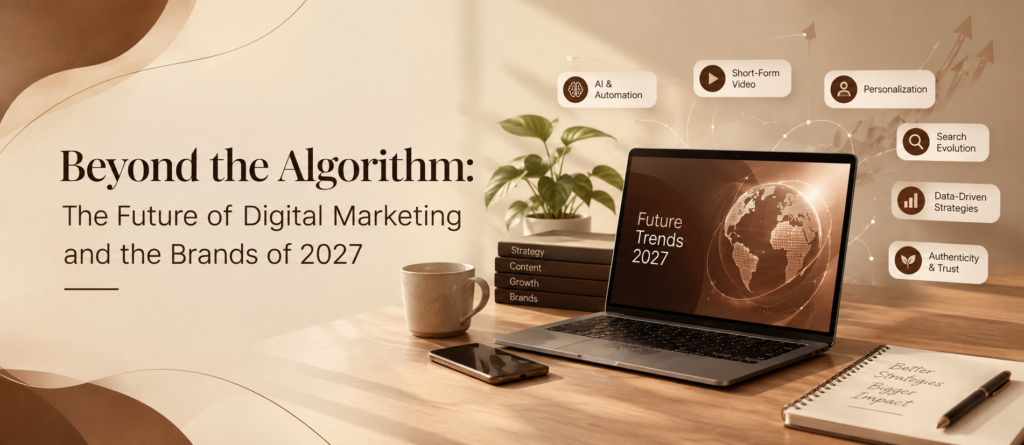
Digital marketing has never been a field that stays the same for long.
A strategy that worked yesterday may not produce the same results tomorrow. New platforms emerge, customer expectations change, algorithms evolve, and technology continues to influence the way businesses communicate with people.
But one thing remains constant: brands need to understand where their audience is going and how they can remain meaningful in that changing environment.
As we move towards 2027, digital marketing is entering a new phase. Artificial intelligence is becoming more integrated into everyday business, customers are becoming more selective, and competition for attention is growing across every digital platform.
The future of digital marketing will not simply be about using the newest technology. It will be about understanding people better, creating more meaningful experiences, and finding the right balance between technology and human creativity.
For brands, this means preparing for a digital world where being present is no longer enough. They must also be relevant, trustworthy, and adaptable.
Digital Marketing Is Changing Faster Than Ever
A few years ago, businesses mainly focused on websites, social media pages, search engine optimization, and online advertisements.
Today, digital marketing has become much more connected and complex.
Customers may discover a brand through a social media reel, search for reviews on Google, watch a product video on YouTube, visit the website, and finally make a purchase through an online platform.
Every step of this journey creates an opportunity for a brand to connect with its audience.
By 2027, these interactions are likely to become even more integrated. Businesses will need to think beyond individual platforms and focus on creating a consistent experience wherever customers encounter their brand.
The future belongs to brands that understand not only how to attract attention, but also how to maintain it.
Trends That Will Shape Digital Marketing in 2027
1. Artificial Intelligence Will Become a Bigger Part of Marketing
Artificial intelligence is already changing the way businesses approach digital marketing.
From content creation and customer service to data analysis and personalized recommendations, AI-powered tools are making many marketing processes faster and more efficient.
By 2027, artificial intelligence is expected to play an even larger role in helping businesses understand customer behavior, automate repetitive tasks, and develop marketing strategies.
However, AI should not be viewed as a replacement for creativity.
Technology can help generate ideas, analyze information, and improve efficiency, but human understanding is still essential.
A machine can identify patterns in data, but understanding emotions, cultural differences, and genuine human experiences requires a deeper perspective.
The most effective marketers will likely be those who know how to use technology without losing the human element behind their communication.
The future is not about choosing between AI and creativity. It is about bringing both together.
2. Personalization Will Become More Important
Customers today are exposed to a huge amount of content every day.
Because of this, generic advertisements and messages are becoming less effective.
People want brands to understand their needs and offer experiences that feel relevant to them.
Personalization allows businesses to communicate with customers based on their interests, preferences, and behavior.
For example, an online store may recommend products based on previous purchases. A streaming platform may suggest content based on viewing habits. A brand may create different messages for different customer groups.
By 2027, personalization is likely to become an important expectation rather than just an additional marketing feature.
Customers will increasingly value brands that understand their individual needs.
However, personalization should always be balanced with privacy and transparency. Building trust means using customer information responsibly and communicating clearly about how data is handled.
3. Short-Form Video Will Continue to Influence Brand Communication
Short-form videos have changed the way people consume content.
Platforms such as Instagram Reels, YouTube Shorts, and TikTok have made it possible for brands to communicate ideas within seconds.
Video content is engaging because it combines visuals, sound, storytelling, and emotion.
By 2027, short-form video is likely to remain an important part of digital marketing strategies.
But simply creating videos will not guarantee success.
As more businesses invest in video content, the challenge will be creating something that feels original and valuable.
Brands will need to focus on storytelling, creativity, and relevance rather than producing content only for the sake of following trends.
A simple, authentic video that connects with the right audience may be more meaningful than a highly produced advertisement that feels disconnected.
4. Social Media Will Become More Than a Place for Entertainment
Social media platforms are no longer used only for sharing photos and connecting with friends.
They have become important spaces for discovering products, researching businesses, building communities, and making purchasing decisions.
Many people now use social media to search for recommendations, explore brands, and learn about new products.
This means businesses will need to think about social media as part of their overall customer journey.
By 2027, social media marketing will likely involve more than regular posting. Brands will need to focus on conversations, community building, customer service, and meaningful engagement.
The goal should not simply be to gain followers.
It should be to create a community of people who trust and connect with the brand.
5. SEO Will Continue to Evolve
Search engine optimization has always been an important part of digital marketing.
Traditionally, businesses focused on keywords and ranking websites on search engines.
However, search behavior is changing.
People are increasingly using social media, video platforms, voice assistants, and AI-powered search tools to find information.
This means SEO strategies will need to evolve along with customer behavior.
In 2027, businesses will need to focus on creating helpful, trustworthy, and well-structured content that answers real questions.
SEO will become less about simply inserting keywords and more about understanding search intent.
The brands that provide genuinely useful information will have better opportunities to remain discoverable across changing digital platforms.
6. Authenticity Will Become a Competitive Advantage
As technology makes content creation easier, audiences may become more aware of repetitive and artificial communication.
AI-generated content, automated advertisements, and similar marketing messages may become common across industries.
In such an environment, authenticity will become increasingly valuable.
People want to connect with brands that feel real.
They appreciate honest communication, genuine customer experiences, and stories that reflect the actual values of a business.
This does not mean brands need to share every personal detail or create emotional content constantly.
It simply means their communication should feel consistent with who they are.
A brand that promises quality should deliver quality.
A brand that talks about customer care should demonstrate it through actions.
In the future, trust will depend not only on what brands say, but also on whether their actions support their message.
7. Data Will Guide Better Marketing Decisions
Digital marketing provides businesses with access to valuable information about their audiences.
Website visits, engagement rates, customer behavior, advertising performance, and conversion data can all help marketers understand what is working and what needs improvement.
By 2027, data-driven marketing will become even more important as businesses look for efficient ways to use their resources.
However, data alone does not create successful marketing.
Numbers need interpretation.
A marketer must understand why a particular campaign performed well, why another failed, and what those results reveal about customer behavior.
The future of digital marketing will require both analytical thinking and creative problem-solving.
Data tells marketers what is happening.
Strategy helps them decide what to do next.
8. Customer Experience Will Become a Major Brand Differentiator
Customers no longer judge brands only by their products or prices.
The overall experience matters.
How easy is it to find information? How quickly does the business respond? Is the website user-friendly? Does the customer receive support after making a purchase?
All of these interactions influence brand perception.
By 2027, businesses will need to focus more on creating smooth and consistent customer experiences across digital platforms.
A customer may interact with a brand through social media, a website, email, and customer service before completing a purchase.
If these experiences feel disconnected, it can affect trust.
Brands that understand the complete customer journey will be better positioned to build long-term relationships.
What Should Businesses Prepare for in 2027?
The future of digital marketing may bring new platforms, tools, and technologies, but businesses do not need to chase every trend.
Instead, they should focus on building strong foundations.
A successful digital marketing strategy in 2027 will likely depend on:
-
Understanding customer needs and changing behavior.
-
Creating valuable and relevant content.
-
Using technology to improve efficiency.
-
Maintaining a consistent brand identity.
-
Building trust through authentic communication.
-
Using data to make informed decisions.
-
Adapting to new digital platforms and opportunities.
-
Prioritizing customer experience.
The most important skill for businesses will be adaptability.
Digital marketing is constantly changing, and brands that refuse to evolve may struggle to remain relevant.
At the same time, constantly changing direction without understanding the audience can create confusion.
The best approach is to remain flexible while staying connected to the core values of the brand.
Conclusion
The future of digital marketing is not simply about newer tools, faster technology, or more advanced algorithms.
It is about how businesses use these changes to create better connections with people.
As we move towards 2027, artificial intelligence, personalization, video content, evolving SEO, and data-driven strategies will continue shaping the digital landscape. But technology alone will not determine which brands succeed.
The brands that stand out will be those that understand their audience, communicate authentically, and adapt without losing their identity.
Digital marketing will continue to evolve, but the purpose behind it will remain the same: reaching the right people with the right message at the right time.
The future belongs to brands that are willing to learn, experiment, and grow.
Because in a constantly changing digital world, staying relevant is not about predicting every trend.
It is about being ready to evolve with the people you serve.